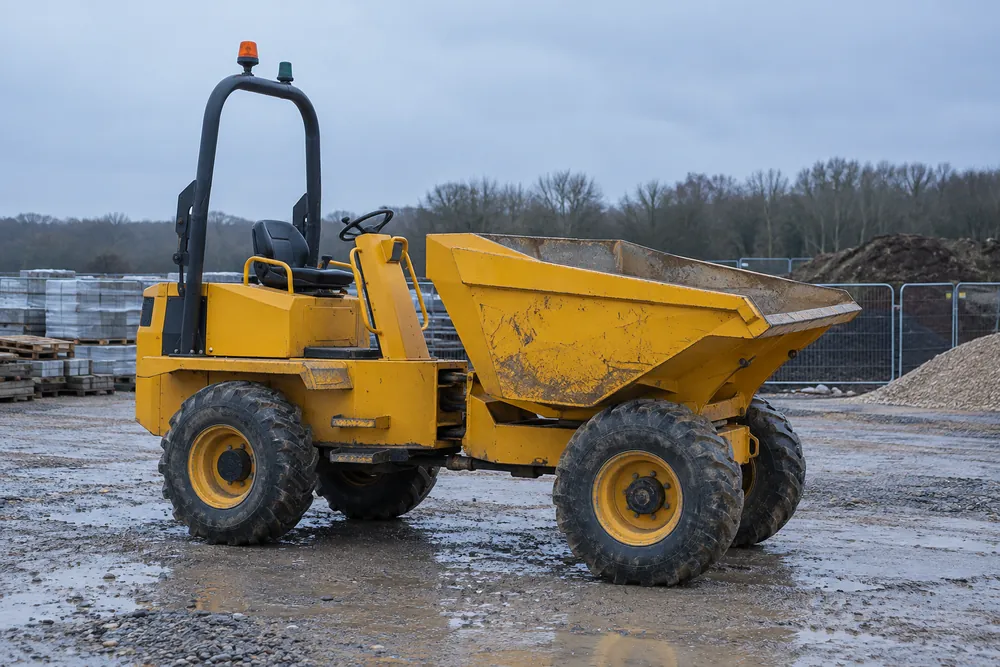
Match The Dumper To The Route
Dumper hire is useful when soil, rubble or aggregate must move between excavation, stockpile and loading points. The right choice depends on the route as much as the volume of material. Narrow access, turning space, gradients and the ground surface can all limit which machine is appropriate.
Explain the material and whether it will be loaded by an excavator, from a stockpile or through another method. A machine’s payload rating is a weight limit, so dense or wet material can reach that limit before the skip appears full. Do not select solely on the apparent volume of the skip.
Include the distance and likely number of movements in your enquiry. A compact machine may suit restricted access but need more journeys. A larger dumper can be inefficient or unsafe if it cannot turn, pass through the entrance or reach the discharge area without conflicting with other work.
Tipping And Loading Arrangements
Forward-tip and swivel-tip arrangements serve different site layouts. A swivel skip may help where the machine cannot face the discharge point directly, but the ground and tipping position still need assessment. High-tip configurations have specific limitations and should be selected against the actual loading task.
Agree how the dumper will approach and leave the loading area. Keep people out of the interaction zone between the excavator and dumper. The loading method should follow the machine instructions and the site’s agreed system of work, including where the driver must be during loading.
Plan discharge points before work begins. An excavation edge, soft shoulder or unstable stockpile is not a safe place to improvise a tipping manoeuvre. Where edge protection or stop blocks are needed, the responsible site team must arrange them as part of the working method.
Dumper Safety On Commercial Sites
The HSE dumper guidance identifies overturning and pedestrian collision as key risks. Provide segregated routes, suitable ground and trained operators. Follow the manufacturer’s gradient limits, use the seatbelt with the rollover protection provided and avoid overloading the skip.
The Provision and Use of Work Equipment Regulations 1998 apply to hired dumpers. The equipment must be suitable for its use and operated by people with adequate instruction and training. An induction needs to explain the actual route, crossing points and restrictions on the site.
Check visibility before choosing a dumper and review it during the task. Stored materials and changing ground levels can create new blind spots. Reduce reversing where possible and use a properly planned system with competent assistance where the site assessment requires it.
From Site Brief To Collection
First, provide the postcode, material type, loading machine and expected hire dates. Add the narrowest access width, gradients and the proposed discharge arrangement. Tell us about any operational restrictions, such as a shared entrance or work near occupied commercial premises.
Next, confirm the selected payload and tipping configuration. Check the machine’s physical dimensions, operating limits and compatibility with the loading equipment. Agree the delivery and collection arrangements, together with fuel, cleaning and security requirements.
At handover, record the dumper’s condition and identify the daily checks. Confirm the operation of brakes, steering, warning devices and other safety equipment using the manufacturer’s instructions. Report defects through the agreed hire procedure and stop work if a safety-critical fault is found.
During the hire period, keep haul routes maintained and review the route after rain or ground changes. Clear spillages that could affect grip or pedestrians. Finish by following the off-hire procedure and leaving the machine in the agreed collection location.
Cost And Equipment Coordination
Dumper hire costs vary with payload, tipping configuration, duration and transport. Fuel, cleaning, damage arrangements and operating-hour allowances may affect the final charge. Request a written quotation and check how an extension or collection delay changes the hire period.
If the dumper supports excavator work, specify both machines together. Matching the loading arrangement, bucket and payload helps create a workable sequence. For reinstatement, include the compaction stage so equipment does not arrive before the material is ready.
Dumper Hire Questions
Do I Need A Swivel-Tip Dumper?
A swivel-tip dumper may suit a route where you need to discharge beside the machine rather than straight ahead. Selection still depends on the payload, ground and safe tipping position. Send the loading and discharge layout with your enquiry so the tipping configuration can be assessed against the actual movements and available turning space.
Can A Dumper Work On Sloping Ground?
Dumper use on sloping ground depends on the model’s limits and the site assessment. Follow the manufacturer’s instructions and account for surface condition, load and travel direction. Do not assume a general gradient limit suits every machine, and avoid stockpile travel or tipping near unsupported edges without a suitable working method.